Why Squalane Supports Dry, Depleted Skin
If your skin feels dry, rough or less comfortable than usual, squalane can help bring softness, suppleness and a more nourished feel to your routine. In this guide, rooted in facialist expertise, we explore the squalane benefits for skin in detail, from how it softens and smooths to why it suits so many different complexions and conditions. You will also find guidance on where it fits within a daily ritual and how to choose the right texture for your needs.
What is squalane, and why does dry skin respond so well to it?
Squalane is one of those ingredients that quietly does a great deal. Lightweight, skin-compatible and remarkably easy to wear, it works as an emollient — softening the skin's surface, smoothing away rough texture and helping the complexion feel more comfortable and settled. It absorbs readily without leaving a greasy finish, which makes it a reassuring choice for skin that craves nourishment but doesn't want to feel weighed down.
It's worth knowing the difference between squalane and squalene. Squalene occurs naturally in the skin's own sebum, but it's unstable and oxidises quickly. Squalane is its stabilised counterpart, and the benefits go well beyond simple emolliency. A recent study found that squalane is a highly stable derivative of squalene with moisturising properties and antioxidant activity, and demonstrated its ability to counteract oxidative stress and support skin regeneration — qualities that extend what this ingredient can offer across a range of skin concerns.
For skin that feels depleted, thirsty or easily overwhelmed by richer formulas, squalane tends to feel immediately comforting. It works gently, without disrupting or overloading the skin, which is part of why it suits so many different complexions and conditions. That said, dry and dehydrated skin can look and feel quite similar, yet they often respond to slightly different kinds of care. If you're not sure which applies to you, our guide to dehydrated vs dry skin is a helpful place to start.
How squalane helps skin feel softer, smoother and more comfortable
One of the reasons squalane has become such a well-loved ingredient is that its benefits tend to feel noticeable quite quickly — even for those who have tried countless products without finding quite the right fit. It sits in that rare category of ingredients that feel both nourishing and effortless, which makes it particularly appealing for dry skin that still dislikes anything too rich or heavy.
Here is what it tends to do well:
- Supports lasting moisture comfort — squalane helps skin hold onto hydration throughout the day, so that tight, thirsty feeling eases over time rather than returning by mid-afternoon.
- Smooths and softens surface texture — it can help refine rough or uneven patches, leaving skin feeling noticeably more cushioned to the touch.
- Absorbs without residue — unlike heavier oils, squalane sinks in readily, leaving a comfortable, breathable finish rather than a greasy layer.
- Supports suppleness and flexibility — skin that has been feeling rigid or papery tends to regain a more resilient, pliant quality with regular use.
- Non-comedogenic by nature — it is unlikely to block pores, which matters for dry skin types who worry about breakouts when adding richer products to their routine.
- Layers well within a routine — squalane works quietly alongside other products rather than competing with them, making it easy to build into almost any existing ritual.
Taken together, these qualities make squalane a quietly dependable choice for skin that craves comfort without compromise. If you are looking for formulas where it can really earn its place, our moisturising skincare collection is a considered place to start.
Why squalane is often a good match for dry, dehydrated or texture-prone skin
Dry skin and dehydrated skin are often used interchangeably, but they're actually quite different. Dry skin is a skin type — one that naturally produces less oil than average. Dehydration, on the other hand, is a condition where the skin is lacking water, and it can affect any skin type, including oily ones. What makes squalane particularly useful here is that it can support both concerns at once, reinforcing the skin's natural lipid barrier and slowing the rate at which moisture escapes throughout the day.
It's also pleasingly adaptable within a routine. For a dry skin type, squalane layers comfortably beneath a moisturiser, adding an extra cushion of nourishment without disrupting what sits on top. For skin that feels dehydrated or texture-prone but not heavy or congested, it can work well as a finishing step — something that brings comfort without any sense of weight or residue.
Squalane tends to suit skin that's experiencing:
- Roughness or a tight, parched feeling that lingers even after moisturising
- A dull, flat appearance that seems difficult to shift
- Sensitivity that surfaces when the skin's protective layer feels less resilient
- Persistent dryness that a moisturiser alone doesn't quite resolve
It also pairs well with other supporting ingredients. Hyaluronic acid draws water into the skin; ceramides help hold the barrier together. Used alongside squalane, these ingredients work in a complementary way — each one reinforcing what the others are doing, rather than competing.
Where squalane fits in a facialist-led routine
Squalane tends to feel most comforting when skin is freshly cleansed and still holding a little moisture. In the Emma Hardie approach, that means letting your routine unfold gently, so each layer supports the next and the squalane benefits for skin feel easy to enjoy rather than overworked.
- Start with a comforting cleanse. In the evening, apply Moringa Cleansing Balm to dry skin and massage with slow, linear movements before adding warm water to emulsify. Remove with the Dual Action Cleansing Cloth, using the microfibre side first to lift away balm, make-up, SPF and daily build-up, then the cotton muslin side to softly refine. You can find the full cleansing ritual here.
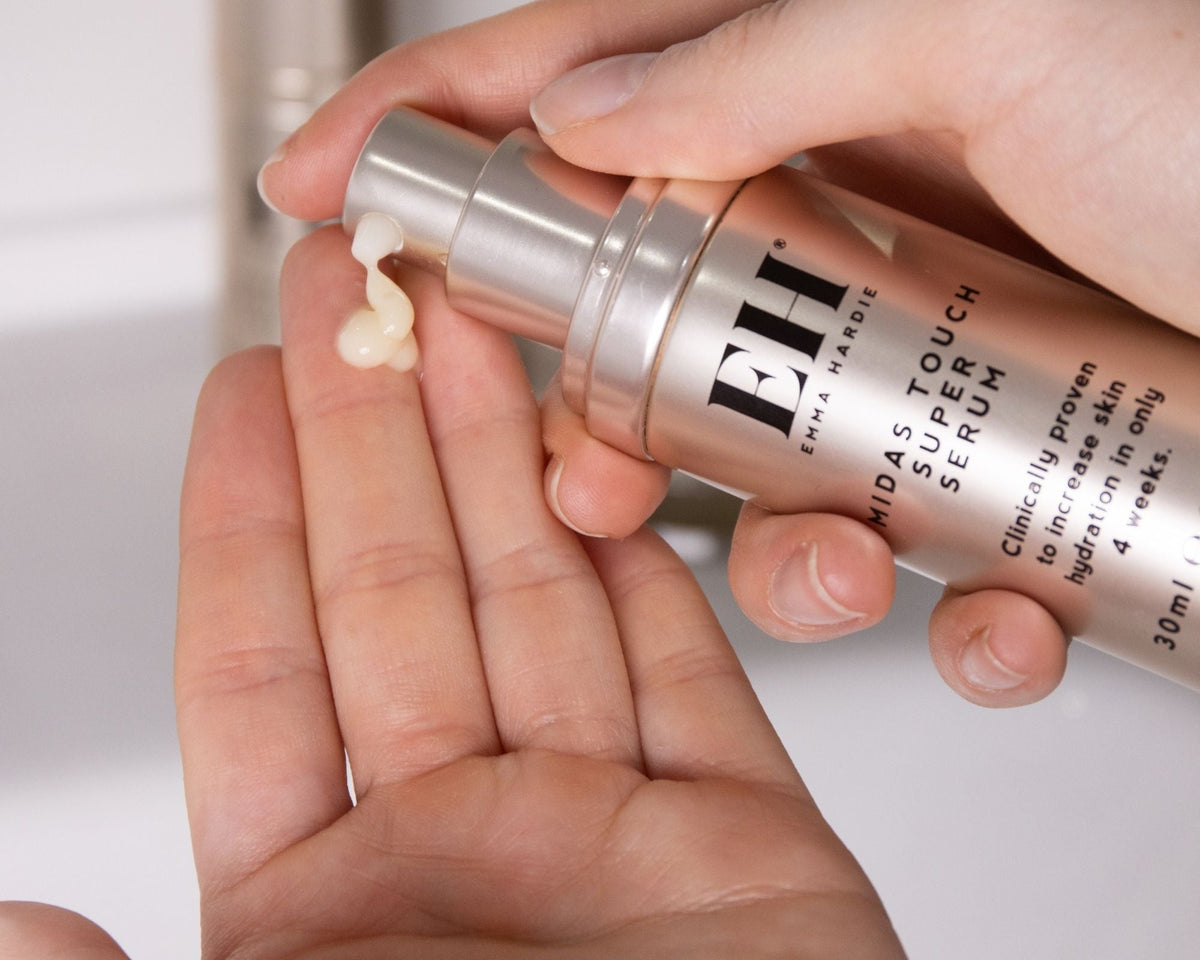
- Add targeted support with squalane. After cleansing, apply Midas Touch Super Serum before moisturiser. This is where squalane sits within the Emma Hardie routine, alongside other nourishing and skin-supporting ingredients, to help skin feel smoother, softer and more resilient. Follow with moisturiser.
- Seal in comfort with the moisturiser that suits your skin. If your skin wants richer nourishment, Midas Touch Revitalising Cream brings a more cushioned finish. If you prefer a lighter texture, choose a fresher moisturiser that still keeps skin feeling comfortable.
Facialist tip: Apply your serum while skin is clean and slightly fresh from cleansing, then give it a moment to settle before moisturiser. This helps the routine feel smooth and comfortable, without overloading skin that already feels dry or depleted.
Frequently Asked Questions
Is it okay to use squalane every day?
Yes, squalane can work beautifully as an everyday step. Its lightweight, skin-compatible texture makes it easy to layer daily, whether you press it into damp skin before moisturiser for lighter comfort or use it as a final evening layer when skin feels more dry, tight or depleted.
What not to mix with squalane?
There is very little you need to avoid mixing with squalane. It layers comfortably with most skincare ingredients and tends to work in a complementary way alongside formulas such as hyaluronic acid and ceramides, which is part of why it fits so easily into dry or dehydrated skin routines.