What Causes Hyperpigmentation and How to Even Skin Tone
Hyperpigmentation is one of the most common skin concerns we encounter, yet it is also one of the most misunderstood. This guide explains what is actually happening beneath the surface, from sun-induced dark spots to post-breakout marks and hormonal changes, so you can approach your skin with real clarity. You will also find practical, facialist-led guidance on how to even skin tone through daily protection, the right active ingredients, and the kind of consistent, unhurried care that delivers lasting results.
Why skin tone looks uneven in the first place
If you have ever looked in the mirror and noticed patches of deeper colour, marks that seem to outstay their welcome, or a general flatness you cannot quite shift, you are not alone. Uneven skin tone is one of the most common concerns we hear, and it rarely comes down to a single cause.
Hyperpigmentation occurs when certain areas of skin produce more melanin than others — the natural pigment that gives skin its colour. But how that shows up varies enormously from person to person. For some it is dark spots on the face; for others, post-blemish marks that linger long after a breakout has cleared. It might appear as sun-induced patches across the cheeks, or simply a dullness that makes skin look tired rather than alive. Often, it is a combination of several things happening at once. That is precisely why blanket solutions rarely deliver.
From a facialist's perspective, the most useful thing you can do is understand what is actually driving the change. The cause shapes everything — which ingredients will genuinely help, how to support your skin day to day, and how much patience the process requires. That is at the heart of our philosophy: working with your skin rather than trying to override it..
When you are ready to explore your options, our pigmentation and uneven skin tone collection is a thoughtful place to start.
The most common causes: sun exposure, inflammation, and hormones
Understanding what is driving your uneven skin tone is the essential first step. Different causes behave quite differently on the skin, and knowing how to even skin tone effectively really does begin with identifying which trigger — or combination of triggers — is at play for you.
-
UV exposure is one of the most common causes. When skin spends time in the sun, it can produce more pigment as a form of protection. Over time, this can show as scattered dark spots, often on the cheeks, nose, forehead and décolleté. These marks can deepen gradually, which is why daily SPF matters so much.
-
Post-blemish marks can appear after a breakout, irritation or picking at the skin. Even once the blemish has gone, a darker mark can remain while the skin continues to settle. This can be more noticeable on deeper skin tones, where marks after blemishes or irritation may look stronger and take longer to fade.
- Hormonal pigmentation, or melasma, can appear during times of hormonal change, including pregnancy, menopause or while using hormonal contraception. It often shows as softer, more diffused patches across areas such as the cheeks, forehead or upper lip. Sun exposure can make it look more pronounced, so consistent protection is especially important.
It is also worth knowing that more than one of these causes can be present at the same time, which is why taking a considered look at your skin before building a routine really matters. Our blemishes, scarring, and sun damage collection is a helpful place to begin exploring targeted support.
How to even skin tone: the habits that actually help
If you are wondering how to even skin tone, it helps to think like a facialist: less force, more consistency. At Emma Hardie, that means supporting the skin with calm, daily rituals, from protective skincare to the gentle, sweeping touch of our linear massage method. Uneven tone usually builds slowly, so a more even-looking complexion tends to return the same way.
-
Wear SPF every morning. If you want to know how to reduce hyperpigmentation, this is the habit that matters most. UV exposure is one of the main uneven skin tone causes, so broad-spectrum protection every day is essential, whatever the weather.
-
Add vitamin C in a steady way. Vitamin C can help brighten the look of discolouration and support a fresher, more radiant complexion over time. If you are exploring options, our serums and oils collection is a helpful place to find formulas that slot easily into a morning routine.
-
Exfoliate gently, not aggressively. Gentle exfoliation can help lift away dull surface build-up so skin looks clearer, smoother and more luminous. The key is to avoid overworking the skin, especially when dark spots or post-blemish marks are already a concern. If you want to add this step, Exfoliating Brightening Tonic is a thoughtful option.
-
Look for niacinamide if skin feels reactive. This ingredient is often recommended among the best ingredients for hyperpigmentation because it supports the barrier while helping skin look calmer and more even. Research is encouraging: A randomized split-face clinical study found the 4-hexylresorcinol plus niacinamide combination improved skin tone and hyperpigmentation over 12 weeks.
-
Keep skin well moisturised. Hydrated skin reflects light more evenly, so tone often appears softer and more balanced while you work on the underlying discolouration.
-
Be patient and stay consistent. When it comes to dark spots on face treatment, visible change is gradual. Most people start to notice improvement after six to twelve weeks of daily care, not overnight.
The gentlest routines are often the ones skin responds to best. Small, regular steps really do add up.
A calmer approach to brighter-looking skin, every day
The habits above do not need to become a long or complicated routine. For Emma Hardie, brighter-looking skin comes from a few considered steps, chosen with care and repeated consistently.
In the morning, that might mean Protect & Prime SPF30 as your daily protection step, with Vi C Radiant Renewal Serum when you want more targeted brightness.
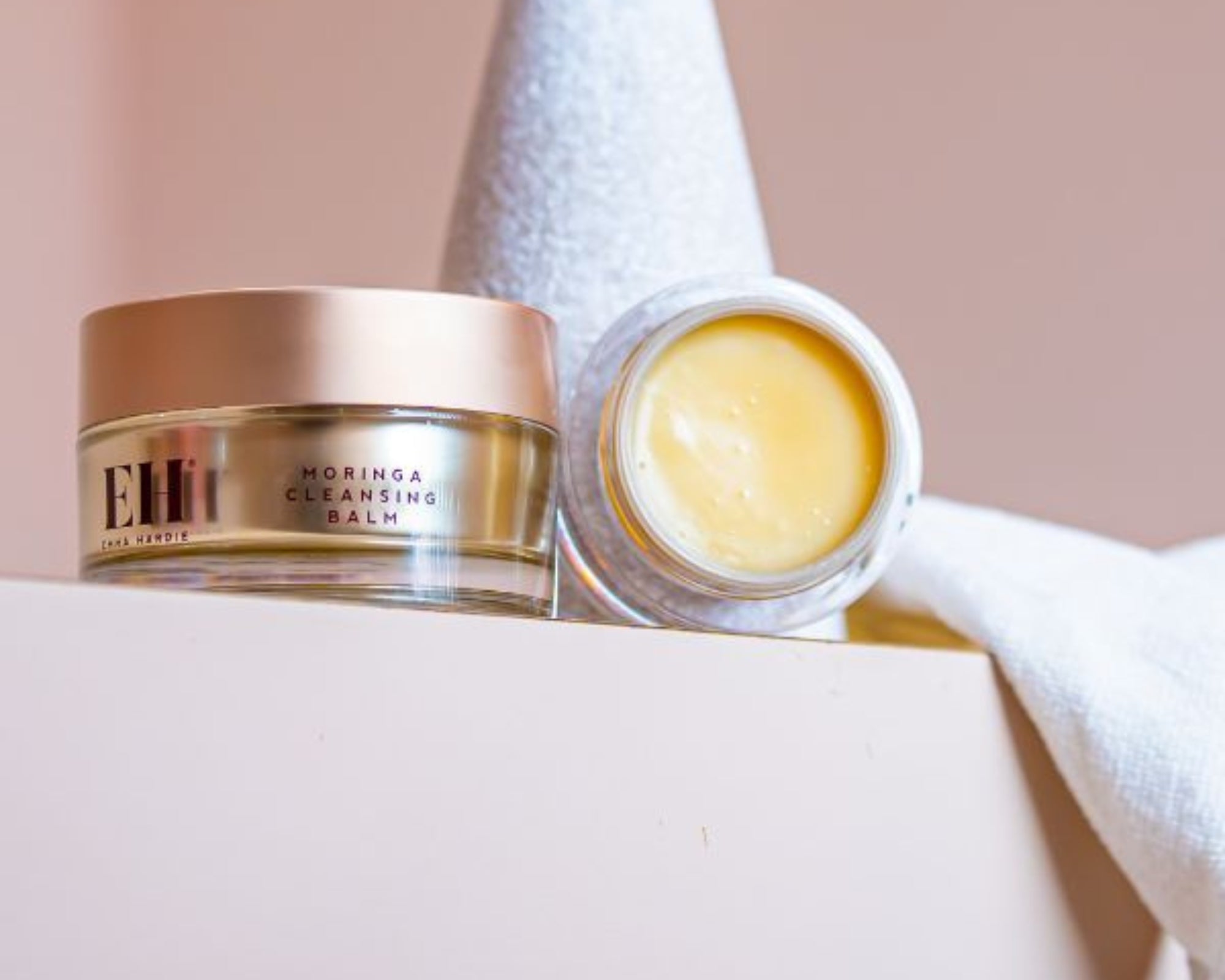
In the evening, begin with a thorough, comforting cleanse. Moringa Cleansing Balm melts away make-up, SPF and daily build-up while keeping skin feeling soft and cushioned. Remove with the Dual Action Cleansing Cloth, using the microfibre side first to lift away the day, then the cotton muslin side to gently polish the skin. This gives the ritual a soft exfoliating step without relying on harsh scrubs.
A few times a week, Exfoliating Brightening Tonic can then be added after cleansing to support gentle renewal, refine the look of texture and lift dull surface build-up. If your skin is new to exfoliation, start slowly and avoid overworking the skin.
You do not need every step every day. Choose what feels right for your skin, introduce new products slowly, and keep the ritual simple enough to repeat.
But the ritual matters just as much as what you apply. Massage, practised with intention using Emma Hardie’s signature linear technique, can help bring a fresher, more awakened look to the skin. Brilliance Facial Oil works beautifully at this step, giving slip for massage while adding nourishment, softness and glow.
The most radiant skin is rarely the result of aggressive treatment. It comes from calm, consistent, considered care. Protect every morning, treat thoughtfully, and let your routine build over time. Clarity and luminosity have a way of following when your complexion gets the steady support it needs.
Frequently Asked Questions
How do you fix uneven skin tone?
You improve uneven skin tone with calm, consistent care: wear broad-spectrum SPF every morning, use brightening actives like vitamin C or niacinamide, exfoliate gently, and keep skin well moisturised. Avoid picking and overdoing exfoliation, as irritation can prolong marks. Visible improvement usually comes gradually over weeks, not days.
How long does it take to even out skin tone?
It usually takes weeks rather than days to even out skin tone, with many people noticing improvement after about six to twelve weeks of consistent daily care. Progress depends on what is causing the pigmentation, but patience matters: daily SPF, gentle ingredients, and a steady routine tend to bring the best results.
How can I make my skin tone even naturally?
You can support a more even-looking skin tone naturally by keeping your routine gentle and consistent: wear SPF daily, avoid picking or overworking the skin, keep it moisturised, and use thoughtful brightening ingredients over time. Facial massage with a light, sweeping touch can also support a fresher, more balanced-looking complexion.