Adult Breakouts: A Routine for Blemish-Prone Skin
Breakouts in adulthood are more common than many people expect, and a thoughtful skincare routine for breakouts is less about reaching for strong actives and more about choosing the right steps and using them with consistency. This guide covers why adult skin breaks out, how to build a cleansing ritual that supports rather than disrupts, and which Emma Hardie products can help you find a rhythm that feels calm, clear and genuinely sustainable.
Breakouts in adulthood: why they happen and what your skin may need
If you're noticing more breakouts than you used to, you're not alone — and it's not a sign that you're doing something wrong. Adult skin can be complicated, and spots don't always mean what we assume they do.
Hormonal shifts are one of the most common triggers. Changes across your cycle, periods of stress, disrupted sleep, or broader health transitions can all show up on skin. Daily life can play a part too.
Diet, hydration, pollution, weather changes and product build-up may leave skin feeling congested or out of balance. Sometimes, the products that once suited your skin simply stop feeling right for its current state.
It's also worth knowing early on that recurring redness, sensitivity or breakout-like reactions can sometimes point to rosacea, a contact allergy or another skin condition, rather than blemish-prone skin in the conventional sense. If that resonates, it's worth speaking to a dermatologist or GP before building a new routine around it.
For many, the best place to start is a calmer, more consistent routine. Blemish-prone skin often needs thorough cleansing, light hydration and carefully chosen treatment steps, not a harsh or complicated routine. The aim is to keep skin feeling clean, comfortable and supported, while giving it time to settle. That's very much the thinking behind how we approach blemish-prone skin at Emma Hardie. Rooted in facialist expertise, the focus is always on comfort, clarity and long-term skin health, rather than aggressive correction. It's about understanding what your skin actually needs right now, and finding a way to care for it that feels good to maintain.
If you're ready to explore that, our blemish-prone skin collection is a helpful place to begin.
How to build a skincare routine for breakouts without over-stripping skin
Building a routine that supports blemish-prone skin is less about using the strongest products available and more about choosing the right ones and using them consistently. A well-structured approach works with your skin rather than against it — and that starts with understanding that a thorough cleanse is a cornerstone of clarity. When done well, it should leave skin feeling comfortable, calm and balanced, ready for everything that follows.
The morning routine is best kept light and protective: a gentle cleanse, a targeted active where needed, a comfortable moisturiser and SPF. In the evening, there's more room for treatment-focused steps. The key is introducing actives in a considered way rather than layering several strong formulas at once. This two-part structure gives skin the right kind of support at each point in the day without pushing it too far.
A few guiding principles tend to make the most difference for blemish-prone skin:
- Start with a thorough, non-stripping cleanse. Blemish-prone skin still needs comfort, so choose a cleanser that removes make-up, SPF and daily build-up without leaving skin feeling tight.
- Use gentle exfoliation to support clarity. Texture and congestion can benefit from regular, light exfoliation. The key is to avoid harsh scrubs or overuse of strong acids.
- Keep hydration light but consistent. Skipping moisturiser can leave skin feeling unsettled. Choose textures that support comfort without heaviness.
- Treat only where needed. Use targeted blemish products directly on breakouts, rather than layering strong treatments across the whole face.
- Finish with SPF every morning. This matters even more if your routine includes exfoliating acids, retinoid-style products or targeted treatment steps.
- Resist the urge to over-cleanse or skip moisturiser during a breakout, as both can disrupt skin's natural balance over time
- Introduce one product at a time. This makes it easier to understand what your skin likes, and what may be too much.
The sections that follow walk through each step in more detail, with specific product guidance to help you build something that genuinely feels sustainable. If you're new to thinking about routine structure, our guide on how to build a skincare routine is a helpful place to start.
Why the right cleanse can make a blemish-prone routine feel calmer
Cleansing is where any good routine begins, and for blemish-prone skin, getting it right matters more than most. That means removing the day's makeup, SPF and build-up thoroughly, while keeping skin feeling comfortable and balanced throughout. When that foundation is in place, everything that follows can do its job more effectively.
The Moringa Cleansing Balm is designed to do exactly that in one step. Massaged into dry skin, it melts away even stubborn SPF and long-wear makeup, drawing out impurities while skin stays soft and settled. Thorough, but never harsh. If you'd like to get the most from the ritual, our guide walks you through the technique step by step.
A few things worth knowing as you build your cleansing routine:
- The Dual Action Cleansing Cloth supports a more thorough cleanse. Use the microfibre side first to lift away cleanser, make-up, SPF and daily build-up, then follow with the cotton muslin side to gently polish the skin. If your skin feels reactive, use lighter pressure and let the cloth do the work.
- Moringa Light Cleansing Gel can be used as an optional second cleanse, but it also works as a lighter alternative when your skin wants a fresher feel. Use it after Moringa Cleansing Balm on heavier make-up or SPF days, or choose it on its own in the morning, after exercise or whenever a lighter cleanse feels right. If your skin feels actively reactive, keep cleansing simple and use the formula your skin already knows and tolerates.
- Consistency with the basics is where results tend to build. As clinical guidance notes, day-to-day acne skin care includes cleansing, moisturising and sunscreen use — a useful reminder that a calm, well-maintained routine often outperforms a complicated one.
- Aromatic botanicals are central to the Emma Hardie sensorial experience, but if your skin is particularly reactive, it's worth patch testing or introducing any fragrance-forward formula gradually, rather than ruling it out entirely.
A considered cleanse really is the cornerstone of an effective routine for blemish-prone skin. Settle that first step, and the rest of the ritual has a much better chance of working with your skin rather than against it.
Which Emma Hardie products fit into a breakout-friendly routine?
If you are shaping a skincare routine for blemish-prone skin, start with a few clear roles: cleanse, gently refine, balance and treat only where needed. You do not need a long routine for it to feel effective.
- Cleanse: Choose Moringa Light Cleansing Gel if your skin prefers a lighter, fresher cleanse. On heavier make-up or SPF days, Moringa Cleansing Balm can give a more thorough evening cleanse while still leaving skin feeling soft and comfortable.
- Refine gently: Add Exfoliating Brightening Tonic when skin feels congested, uneven or textured. It supports gentle exfoliation without relying on harsh scrubs. Start slowly and build up as skin feels comfortable.
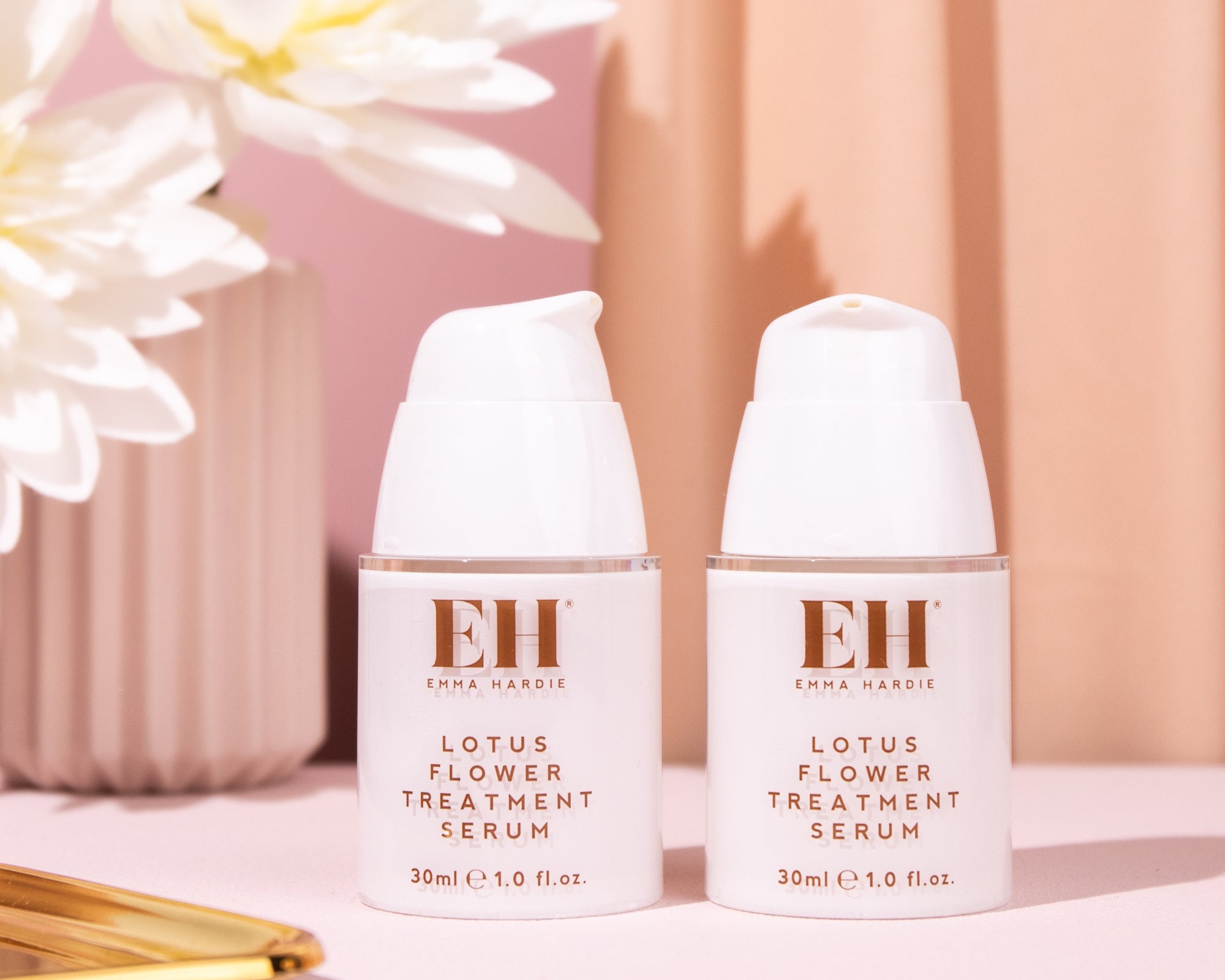
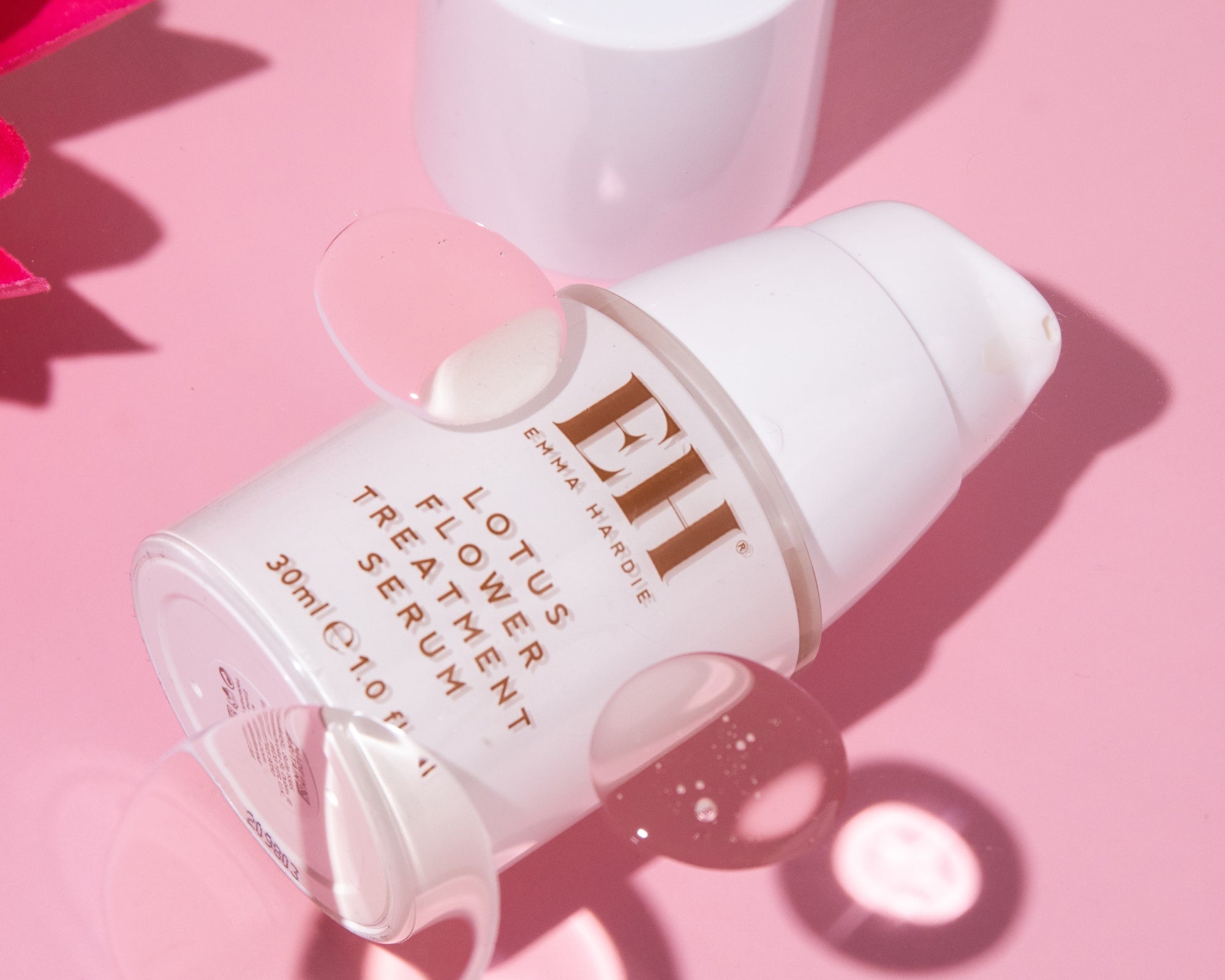
- Balance: Use Lotus Flower Treatment Serum as the main treatment step for skin that feels oily, unsettled or blemish-prone. Keep the rest of the routine simple around it.
- Weekly reset: If skin feels congested but not actively reactive, Purifying Pink Clay Detox Mask can be used as an occasional treatment. Follow with moisturiser so skin feels comfortable, not stripped.
Not every routine for blemish-prone skin needs all of these. Usually, a thoughtful cleanse and a few well-chosen additions will feel more sustainable over time.
How to support spots, texture and comfort over time
Consistency tends to do more for blemish-prone skin than any single active ingredient. Rather than reaching for something stronger when skin feels congested or uneven, a calmer, steadier approach often delivers better results — giving skin the space to settle, rebalance and build real resilience over time.
A few principles worth keeping in mind:
- Keep skin hydrated as you introduce actives, so it feels supported rather than stripped or sensitised.
- Rotate rather than stack — a gentle exfoliant used a couple of times a week tends to serve skin better than layering multiple acids into one routine
- Give new products time to work — most formulas need several weeks before you can fairly judge whether they suit you
- Pay attention to how skin responds — redness, increased sensitivity or new congestion are worth listening to, not pushing through
-
Look for formulas that address texture and comfort together, rather than treating blemishes as the only concern worth solving
If your routine starts to feel like it is asking too much — skin becoming drier, more reactive or newly congested — that is a natural prompt to scale back. Returning to a simple cleanse and moisturiser, then rebuild slowly.
If you want to explore gentler active ingredients our guide to retinol alternatives for comfort, radiance and resilience is worth a read.
Texture, evenness and comfort do improve with time. Not through harsher interventions, but through the kind of steady, thoughtful care that allows skin to find its own balance.
Putting your routine into practice morning and evening
A simple rhythm is often what makes the difference between a routine that holds and one that quietly falls away. Think of morning and evening as two distinct moments, each with its own purpose — and skin tends to respond well to that kind of consistency.
Morning
Start with a gentle balm cleanse, or use Moringa Light Cleansing Gel if your skin prefers a fresher, lighter texture. Follow with a light moisturiser or Lotus Flower Treatment Serum if your skin feels oily, unsettled or out of balance. Finish with SPF every morning.
Evening
Use Moringa Cleansing Balm to remove make-up, SPF and daily build-up. Remove with the Dual Action Cleansing Cloth, using the microfibre side first to lift away cleanser and residue, then the cotton muslin side for a gentle polish if skin feels textured.
If your skin prefers a lighter cleanse, Moringa Light Cleansing Gel can be used instead, or as a second cleanse on heavier SPF or make-up days. From there, add Exfoliating Brightening Tonic a few times a week if skin feels congested or uneven. Finish with moisturiser so skin feels comfortable overnight.
Where to begin
There is no need to overhaul everything at once. Starting with one or two well-chosen products and watching how skin responds is often the most effective approach, and by far the most sustainable. A considered cleanse and a supportive moisturiser can shift a great deal on their own.