Shower Oil or Body Butter? Why Winter Skin Often Needs Both
When winter arrives and skin starts to feel less comfortable, less supple and somehow duller than it did just weeks before, the question of shower oil or body butter tends to surface quite naturally. What follows is facialist-led guidance on how each product supports skin at a different stage of the ritual, why colder weather often calls for both, and how to read what your skin is asking for from one day to the next.
Shower oil or body butter: which one does winter skin need today?
When the temperature drops and the central heating clicks on, skin tends to make its needs felt almost immediately. It loses that comfortable ease, feels less supple, and often looks a little duller than it did a few months ago. It's the point at which the question of shower oil or body butter becomes a very natural one to ask.
The honest answer is that these two products are not really competing for the same role. They work at different moments in a winter body ritual, supporting skin in different ways, and once that distinction clicks into place, the decision becomes far simpler. This article is for anyone weighing up where to begin, or wondering whether both have a place in a cold-weather routine.
It's also worth saying early on: if your skin is showing persistent redness alongside dryness, there are several possible explanations. Rosacea, contact allergy and other skin conditions can all present in ways that overlap with simple dryness, and they don't always share a single cause. If redness is an ongoing concern rather than an occasional reaction, it's worth speaking with a dermatologist or GP alongside making any changes to your body care routine.
What follows isn't a verdict. It's practical, facialist-led guidance on reading what your skin needs from one day to the next, and on building a winter body ritual that supports real, lasting comfort.
How shower oil elevates your cleansing ritual
A shower oil earns its place at the very start of the ritual. Used on damp skin and then rinsed away, it helps bring comfort while you cleanse, rather than waiting until after the shower to soften dry winter skin.
What it does especially well is simple:
- Massaged over damp skin, it works with the water to create a silky emulsion that cleanses while helping skin feel soft and supple
- It rinses away cleanly, so skin feels comfortable and conditioned without a heavy finish
- For anyone considering shower oil vs body butter, this is where shower oil stands out: it supports skin during the cleansing step, when winter dryness can feel most noticeable
- It can also be smoothed on before showering, used afterwards, or added to a warm bath, though the shower is still where it feels most effective
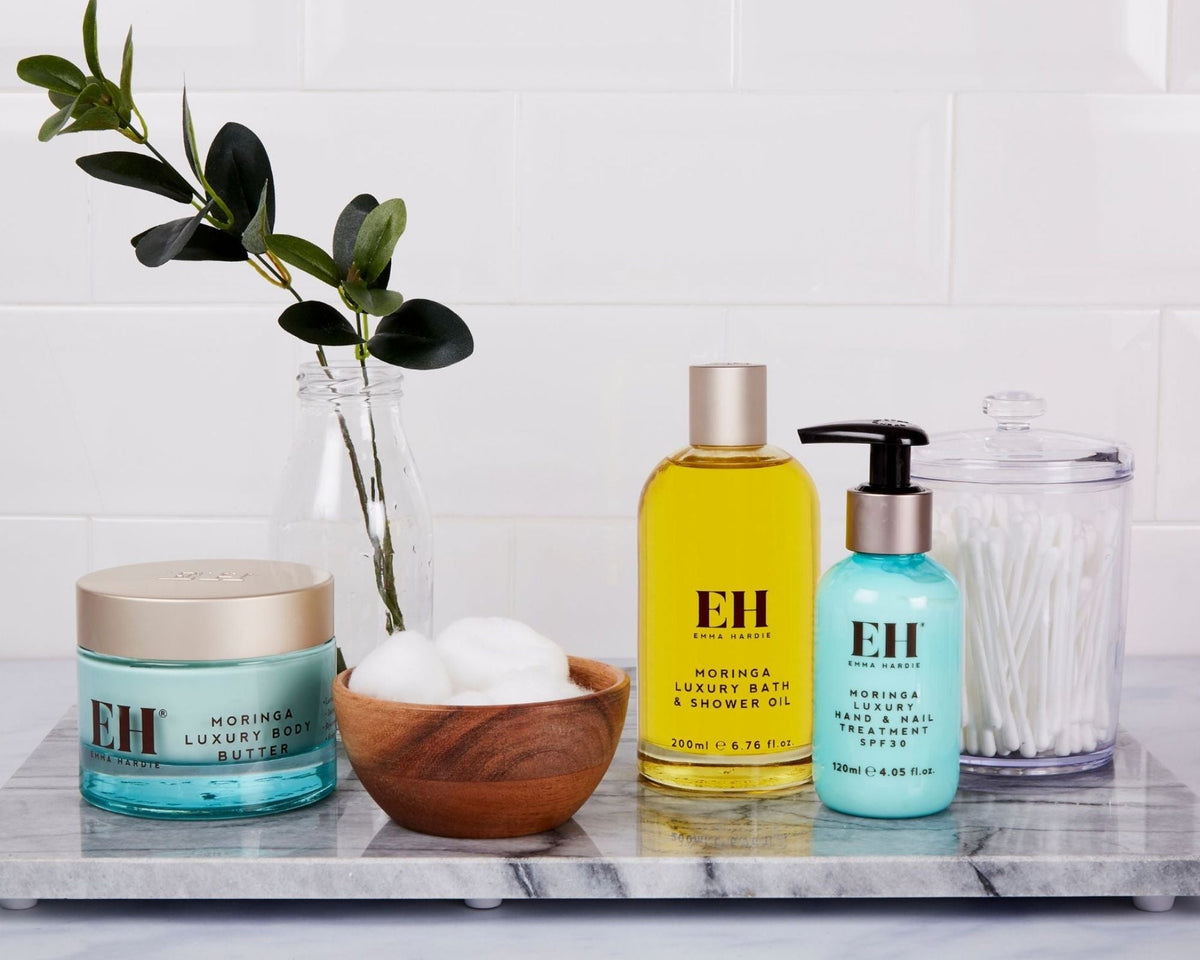
At Emma Hardie, our Moringa Luxury Bath & Shower Oil brings a sensorial touch to this cleansing ritual. Infused with our signature aromatic blend of orange, neroli and jasmine adds a softer mood to the whole experience. Orange feels fresh and uplifting, neroli brings a gentle floral note, and jasmine gives the blend a warm, lingering finish. Together, they turn an everyday shower into a calmer pause at the start or end of the day.
If you are weighing up shower oil or body butter, this is the part body butter cannot quite replace. A body butter comes later, but shower oil changes how skin feels in the moment you cleanse: softer, more comfortable and better prepared for the next step. The bath and pre-shower options are useful additions, but the damp-skin massage and rinse is still the heart of the ritual. Explore our shower and bath oil collection to find the right fit for your winter routine.
Why the body butter works as the finishing step after bathing
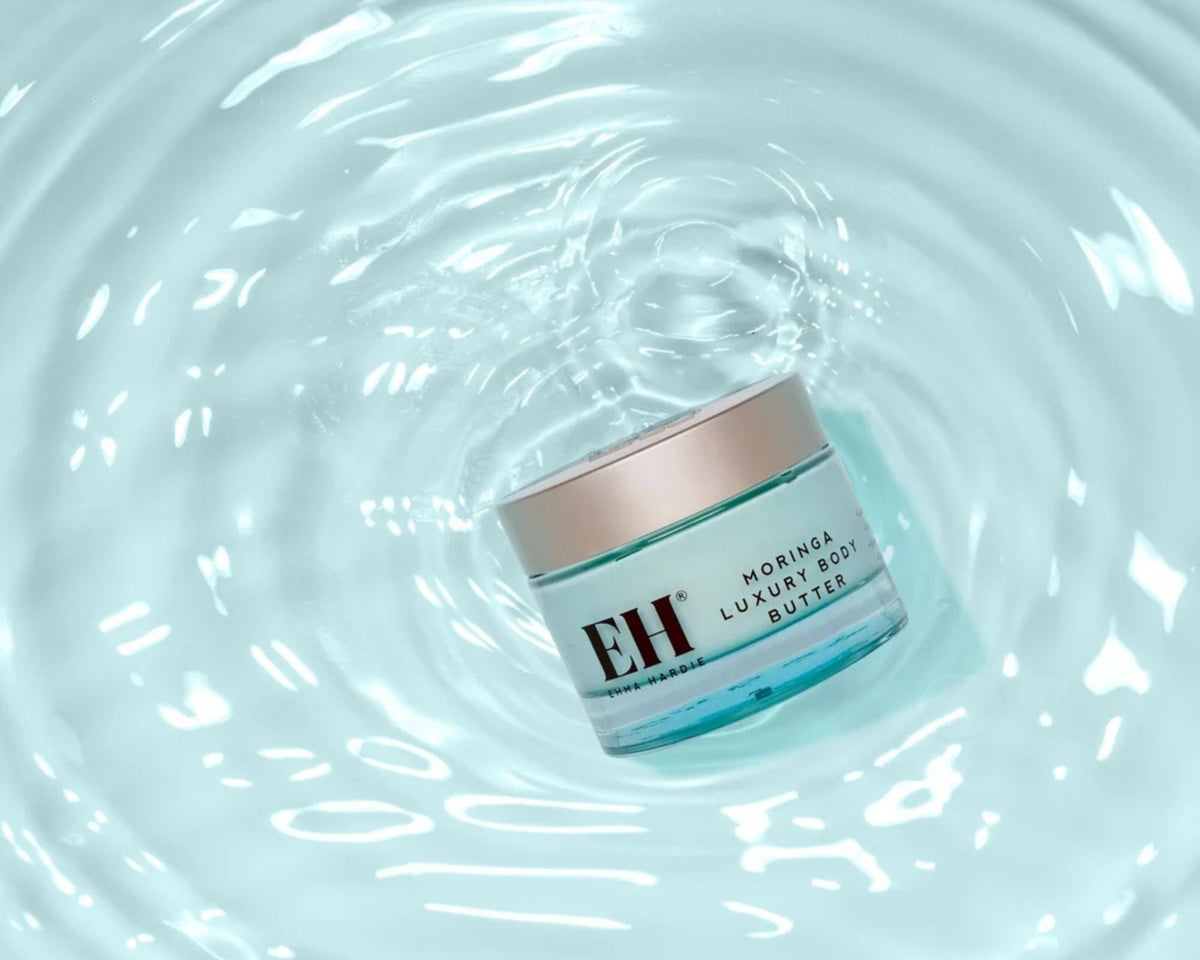
Where our Moringa Luxury Bath & Shower Oil begins the ritual, our Moringa Luxury Body Butter completes it. Applied while skin is still warm from the bath or shower, it works in an entirely different way — settling softly into the surface and delivering the kind of rich, cocooning comfort that lighter formulas simply can't offer when the cold really sets in.
Formulated with shea butter and nourishing botanical oils, it brings both immediate softness and sustained support to skin that's spent the day navigating cold air and central heating. The dense, buttery texture melts on contact with warmth, absorbing smoothly without any heaviness — just that deeply comfortable, well-tended feeling that winter skin tends to crave.
It's especially worth paying attention to the areas that dry out fastest in colder weather. Elbows, knees and shins often lose moisture more quickly than elsewhere, and those are exactly the places that respond most noticeably to a little extra nourishment.
As an evening step, body butter works quietly while you sleep. By morning, the difference in suppleness is easy to feel — skin that seemed tight or rough the night before tends to feel considerably softer and more settled. Used consistently through the colder months, it helps skin hold onto comfort between washes rather than starting from scratch each time.
Body butter is about finish, feel and lasting softness. It works differently to a lightweight daily lotion, and it's not trying to replace your cleansing step — it's simply the richer, more considered close to a winter body ritual.
The more useful question is rarely shower oil or body butter, but rather where each one belongs. They work beautifully in sequence.
How to decide based on how dry your skin feels
The decision often comes down to one simple thing: how your skin feels right now. Winter skin doesn't behave consistently from one day to the next, so matching your routine to your current condition tends to give a more comfortable result than sticking rigidly to the same steps every time.
On lighter days
When skin feels mostly comfortable but a little dulled by cold air, the shower oil alone is often enough. Used in the shower, it hydrates while you cleanse, leaving skin feeling soft and settled without the need for anything extra afterwards. On days when dryness is mild, this single step can be plenty.
For very dry elbows, knees, shins and legs
These areas tend to lose moisture faster than the rest of the body and often need something more concentrated to stay comfortable. Body butter is the stronger choice here — its richer texture works well as a deliberate, targeted application after bathing, when skin is most receptive to what you put on it. Visibly dry elbows or legs that feel rough to the touch are a good signal that this is where your routine needs the most attention.
When both work together
On the most demanding winter days, layering tends to deliver the most comfortable result. The shower oil lays down an initial layer of hydration in the shower, and the body butter then nourishes and seals once skin is dry. Together, they address both that immediate feeling of comfort and the lasting softness that skin needs to hold onto through cold weather.
For patches that feel rougher or flakier, working in an occasional body scrub before either product helps to refine texture so the moisturising steps that follow can do their job more effectively.
Can you use shower oil and body butter together in the same routine?
Yes — and during winter especially, pairing the two is often more effective than choosing between them.
The logic is straightforward. A shower oil works at the moment skin is most vulnerable to moisture loss: during cleansing, when it can protect and condition as you wash. A body butter then steps in after bathing to deliver richer, longer-lasting nourishment that keeps skin feeling soft and comfortable for hours. For anyone dealing with persistently dry skin, or simply navigating the cold, dry air that tends to sap suppleness, this combination gives each product the space to do what it does best.
The simplest sequence looks like this:
- Apply shower oil to skin before or during cleansing, working it in gently before rinsing.
- Rinse thoroughly, then pat skin dry — leaving it just slightly damp rather than fully dry.
- Apply body butter while that residual warmth is still present, so it can absorb and settle in properly.
It's a ritual that builds on itself. The shower oil prepares the skin; the body butter seals in the comfort. Neither step is redundant, and together they create the kind of lasting softness that a single product, used alone, can struggle to maintain through the colder months.
How these steps sit within your wider routine will depend on what else you're using and how your skin responds. If you'd like guidance on layering products in the right order, our skincare layering guide is a good place to continue.
So which should you choose first?
The answer really comes down to where you are in your routine and what your skin is asking for right now.
A shower oil belongs in the shower. It cleanses while it conditions, leaving skin feeling soft and comfortable the moment you step out. If your skin tends to feel dry after bathing, or you simply want your cleansing step to feel more nourishing, this is a natural place to begin.
A body butter is the step that follows. Richer and more enveloping, it helps seal in moisture and support lasting softness through the hours ahead. In colder months especially, it is often the layer that makes the most noticeable difference.
For many people, one or the other will be enough. But if your skin feels persistently rough or dull through winter, using both in the same routine makes a lot of sense. The shower oil does its work during the ritual itself; the body butter extends that care long after you have left the bathroom.
Still weighing things up? A helpful way to decide is to notice when your skin feels at its most uncomfortable. Is it immediately after bathing, or does dryness tend to creep in later in the day? That single question will usually point you in the right direction.
If you are ready to build a routine around both, explore our full body collection to find the right combination for your skin this season. When it comes to winter body care, comfort, softness and suppleness are well worth layering up for.
Frequently Asked Questions
Is shower oil better than lotion?
Not exactly — they do different jobs. Shower oil works during cleansing to help skin feel soft and comfortable in the shower, while a lotion is a post-bathing moisturiser. In winter, the choice depends on when dryness shows up: during washing, later in the day, or both.
Should you use body butter in the shower?
No — body butter works best after the shower, not in it. It is the finishing step, applied while skin is still warm from bathing, where its richer texture can soften dry areas and support longer-lasting comfort through colder weather.
Do I use shower oil in the shower or after?
Mostly in the shower. Shower oil is at its most effective when massaged onto damp skin and rinsed away, helping skin feel soft and conditioned as you cleanse. It can also be used before showering, afterwards, or added to a warm bath, but the shower is its main role.