Bakuchiol: Emma Hardie's Unsung Hero Ingredient
Bakuchiol has become one of those ingredients that quietly earns its reputation, and for good reason. This article explores what it is, how it compares with retinol, the skin concerns it can help to address over time, and how to weave it into a calm, facialist-led Emma Hardie routine. Whether you are new to it or simply curious, consider this your grounded, unhurried guide to getting started.
What is bakuchiol, and why are so many talking about it?
If you have been hearing more about bakuchiol, you are not imagining it. It has become one of the most talked-about ingredients in skincare because it offers a softer, more everyday way to support skin. Bakuchiol comes from the babchi plant, also known as Psoralea corylifolia. While the plant has a long history in traditional practices, in skincare, bakuchiol is now best known as a plant-derived retinol alternative. It is often chosen by those who want the smoothing and radiance-boosting feel of an active skincare ingredient, but with a gentler experience on the skin. The benefits most often associated with bakuchiol are smoother-looking texture, improved radiance and support for the look of fine lines over time. It is also known for being more flexible than retinol, as it does not need to be kept only for evening use. Rooted in facialist expertise, the Emma Hardie approach looks at how skin feels as much as how it looks. Bakuchiol fits naturally into that philosophy, offering steady support for texture, radiance and comfort within a calm, considered ritual. It feels less like a passing trend and more like a thoughtful option for anyone looking for calm, consistent skin support. If you are exploring retinol alternatives for comfort, radiance and resilience, Bakuchiol is a helpful place to begin.
How bakuchiol compares with retinol in real skincare routines
Bakuchiol is often used as a retinol alternative because it supports smoother-looking texture, tone and radiance, while fitting comfortably into a calmer, more considered ritual.This can make bakuchiol a helpful option for different skin needs. If your skin feels sensitive or easily unsettled, bakuchiol may feel easier to introduce than retinol, although every formula should still be patch tested and added slowly. If your skin feels dry, look for bakuchiol within a routine that also includes comforting oils, hydrators or a nourishing moisturiser. If your skin feels oily, congested or blemish-prone, bakuchiol may be a useful choice when your focus is smoother-looking texture, clarity and steady support. A simple comparison helps set expectations:
| Factor | Bakuchiol | Retinol |
|---|---|---|
| Skin tolerance | Often better tolerated | Can cause scaling, stinging or redness |
| Routine flexibility | Often used morning or evening, depending on the formula | More often introduced as an evening step |
| Speed of visible results | Gradual over weeks | Can appear faster for some, often with an adjustment period |
| Sensitive skin suitability | May suit those who find retinol difficult | Usually needs a slower introduction |
A 12-week randomised, double-blind study found that bakuchiol and retinol both improved common signs of facial ageing, with bakuchiol showing a better side-effect profile. Still, bakuchiol should not be treated as a like-for-like retinol replacement in every routine. Its results tend to build gradually, which is why consistency matters. When an ingredient feels comfortable to use, it becomes much easier to keep it in your routine and give the benefits time to develop. The skin concerns bakuchiol can help to address over time Bakuchiol works gradually, building visible results with consistent use rather than delivering overnight change. For skin seeking more resilience, clarity and an overall sense of renewal, it offers a quietly impressive range of benefits — and without the adjustment period that can come with stronger actives.
- Fine lines and the appearance of wrinkles: Bakuchiol supports skin's natural renewal process, helping to visibly soften the look of fine lines over time, particularly around the eyes and mouth.
- Loss of firmness: For skin that feels less toned or defined, bakuchiol may help improve the appearance of firmness and elasticity. It's a useful focus for anyone exploring dedicated support for wrinkles and loss of firmness.
- Uneven skin tone: By encouraging more balanced cell turnover, bakuchiol can help fade the appearance of dark spots, post-blemish marks and general unevenness across the complexion.
- Dullness and lack of radiance: Skin that looks flat or tired often responds well to bakuchiol's ability to encourage a more luminous, refreshed appearance with regular use.
- Rough or uneven texture: With time, bakuchiol helps surface texture feel noticeably smoother and more refined — a subtle but satisfying shift.
Results tend to deepen the longer bakuchiol is woven into a routine, which is part of what makes it such a rewarding ingredient to stay with. It also suits a wide range of skin types, including those that have found traditional retinol too sensitising to use comfortably.
How to add bakuchiol into a calm, effective Emma Hardie routine
One of the most reassuring things about introducing bakuchiol into a routine is how easily it settles in. Rather than demanding adjustments, it works with the skin's natural rhythm — a quality that makes it a natural fit for the calm, results-driven approach at the heart of everything Emma Hardie does. A simple evening ritual to get started:
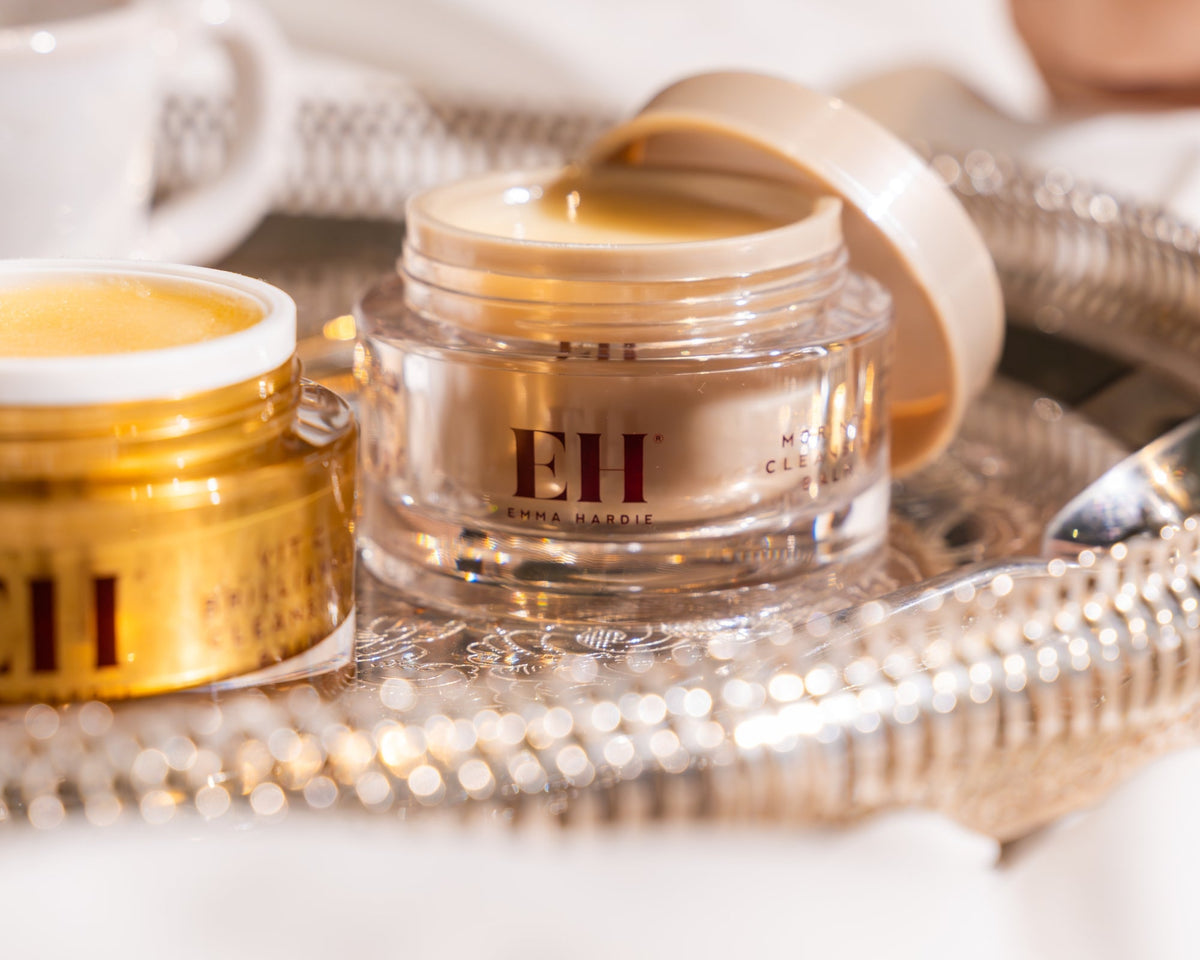
- Begin with Moringa Cleansing Balm
Massage onto dry skin using slow, linear movements to lift away make-up, SPF and daily build-up. Remove with the Dual Action Cleansing Cloth, using the microfibre side first to lift away balm and build-up, then the cotton muslin side to gently polish.
- Choose your bakuchiol-led step
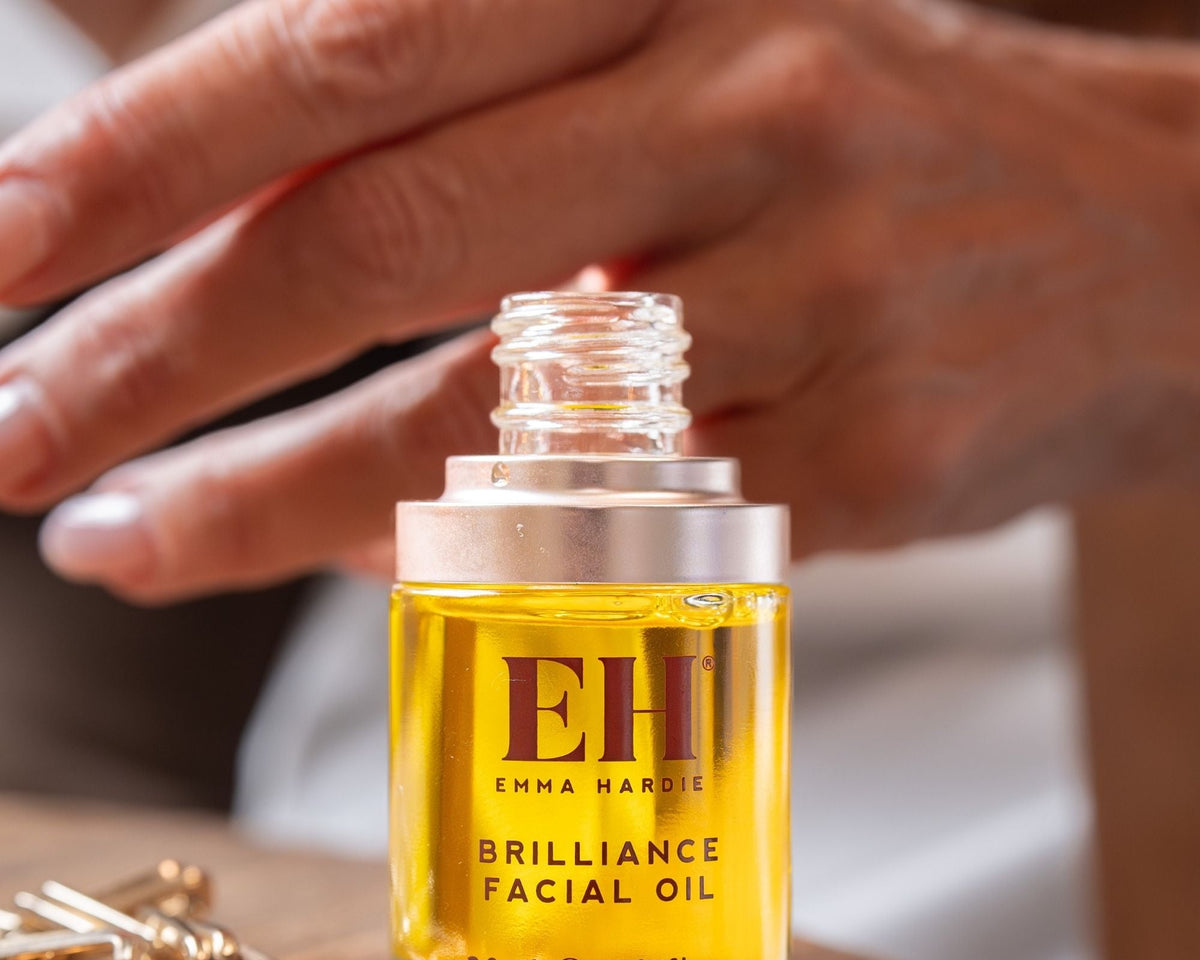
If your focus is texture, dullness or gentle renewal, use Exfoliating Brightening Tonic after cleansing. Apply with a cotton pad and introduce slowly, especially if your skin is new to exfoliating steps. If your focus is smoother-looking skin, comfort and visible support, choose Midas Touch Super Serum as your treatment step. Smooth over the face, neck and décolleté before moisturiser.
- Follow with moisturiser
Choose the texture your skin wants that day. A lighter moisturiser can work well in the morning, while a richer cream can feel more comforting in the evening.
- Finish with SPF every morning
Even when using gentler-feeling actives, daily SPF should always be the final step in your morning routine.
. Bakuchiol slots in quietly to your routine, it sits well alongside other nourishing steps, and gets on with its work without strict timing rules or complicated layering.
Who bakuchiol suits best — and when to patch test or go slowly
One of the most reassuring things about bakuchiol is how broadly it tends to be welcomed by different skin types. For those who find stronger actives difficult — whether that's retinol sensitivity, a naturally reactive complexion, or simply a preference for something gentler — it often slots into a routine without the adjustment period that other renewal ingredients can require. That said, every skin has its own rhythm. If yours tends to react to new products, a gradual introduction is always a sensible starting point: a few times a week before building to daily use, and time between steps to let each layer settle. If you're drawn to a formula with a richer aromatic profile, it's worth noting that fragrance-heavy formulas specifically can occasionally cause sensitivity in more reactive skin. A simple patch test beforehand means you can enjoy the full sensorial experience with ease. It's also worth remembering that persistent redness rarely has one single cause or one single answer. It can stem from rosacea, contact sensitivity, environmental triggers or other skin conditions, and it responds best when the care is shaped around what's actually driving it. If redness is ongoing or difficult to explain, our guide to skincare for sensitive skin and calming redness is a helpful place to start — alongside a conversation with a dermatologist or GP where it feels right. For most skin types, though, bakuchiol is a quietly dependable ingredient. One that works steadily, sits gently, and earns its place in a considered routine.
Frequently Asked Questions
Is bakuchiol better than retinol?
Not necessarily better, but often gentler and easier to use consistently. Bakuchiol can support smoother-looking, more radiant skin over time with fewer common side effects than retinol, although results are usually more gradual and it is not a like-for-like substitute in every routine.
Is bakuchiol an effective ingredient?
Bakuchiol can be an effective ingredient when used consistently, especially for skin that wants support with smoother-looking texture, radiance and the appearance of fine lines. It is often chosen as a gentler-feeling alternative to retinol, although it should not be treated as a direct replacement in every routine.
Who should not use bakuchiol?
There is no single group who should never use bakuchiol, but very reactive skin may benefit from a slower introduction and a patch test first. If your skin is prone to ongoing redness or sensitivity, it helps to consider the wider cause rather than assuming one ingredient suits every situation.