Why You Should Wear SPF Every Day
There is a quiet, persistent question that comes up time and again: why wear SPF every day when the weather is overcast, the sun feels far away, and the day is spent mostly indoors. In this article, we look at what UVA and UVB actually do to skin over time, unpick the myths that make daily protection feel unnecessary, and show how consistent SPF wear supports a smoother, more even-looking complexion for years to come. Consider it a warm, practical guide to one of the most worthwhile habits your morning routine can hold.
Why wear SPF every day, even when it doesn’t feel sunny
On a grey Tuesday morning in October, with rain at the window and no real plans to be outside, SPF can feel easy to skip. Yet from a facialist’s point of view, this is exactly when the habit matters. If you have ever wondered why wear SPF when the sky looks dull, the answer is simple: your skin still sees light, even when you do not feel the sun.
UVA rays, which are closely linked with premature ageing, are present all year round. They move through cloud cover, pass through glass, and reach your skin while you sit near a window, drive across town, or step out for a quick errand. UVB is the ray more often associated with sunburn and tends to be stronger in summer. UVA is quieter. Over time, it contributes to the gradual breakdown of collagen, along with fine lines, uneven tone and a loss of firmness.
This is why daily sunscreen is important on ordinary days, not only on holiday. UV exposure is cumulative. A school run, a lunchtime walk, a seat by a bright window, even a few minutes outdoors here and there all add up over the years. In clinic, it is often these small, repeated exposures that shape how skin looks over time.
The benefits of wearing SPF every day are wonderfully steady rather than dramatic. It helps protect the complexion you have today while supporting skin’s ability to look smoother and brighter in the long run.
If you are ready to make it part of your morning ritual, explore our SPF collection for formulas designed to sit comfortably on skin, every day.
What UVA and UVB actually do to your skin
Sunscreen labels can feel more confusing than they should, especially when you're not entirely sure what you're protecting your skin from. The two types of ultraviolet radiation — UVA and UVB — behave quite differently, but both quietly affect the way your skin looks and feels over time. Understanding that difference makes the case for daily SPF much clearer.
|
UVA |
UVB
|
|
|---|---|---|
|
Penetration depth |
Reaches deep into the dermis |
Affects the outer layers of skin |
|
Primary skin effects |
Accelerates visible ageing, triggers pigmentation and loss of elasticity |
Causes sunburn and surface redness |
|
Seasonal presence |
Consistent year-round, even on overcast days |
Peaks in summer and at higher altitudes |
|
Passes through glass? |
Yes |
Largely blocked |
Whether the sun feels strong or barely there, both ray types are contributing to the same cumulative outcome: fine lines, uneven skin tone, and a complexion that can start to look dull or discoloured before its time. That grey Tuesday commute counts just as much as a week abroad.
A note on SPF numbers: a higher SPF does not mean a formula is reserved for strong sunshine. The rating simply tells you how much UVB protection it provides — not how intense conditions need to be before it becomes relevant. If you're weighing up SPF 30 versus SPF 50 for daily wear, that's worth a closer look.
UV radiation does not take days off. Your protection probably shouldn't either.
The biggest SPF myths that keep people from using it daily
Most of us have a reason we reach for — or quietly skip — our SPF. Often, it comes down to a belief that's been repeated so many times it feels like fact. Here are the ones worth letting go of.
Myth: SPF is only for the beach or holidays.
UV rays are present every single day, not just when you're somewhere warm. The cumulative exposure from a commute, a lunchtime walk, or sitting by a café window adds up far more than most people realise.
Myth: It's too cloudy to bother.
UV rays can still reach the skin through cloud cover. British skies might look grey, but they are not the shield they appear to be.
Myth: You only need it outdoors.
UVA rays pass through glass, so time spent near a window — at your desk, in the car, at home — still counts as exposure. Ageing light doesn't stop at the front door.
Myth: Medium or deeper skin tones don't need it.
Melanin offers some natural defence, but it does not prevent UV-induced damage, hyperpigmentation, or uneven skin tone. Daily SPF benefits every complexion, without exception.
Myth: SPF feels too heavy to wear every day.
Today's formulations are genuinely lightweight. Wearing daily sunscreen no longer means a thick, chalky finish — there is a texture to suit everyone.
Once these myths lose their hold, building a consistent habit becomes much simpler. And since your skin's needs shift across the year, understanding different skin types throughout the seasons is well worth a read alongside this.
How daily SPF supports complexion over time
The long-term cosmetic case for wearing SPF every day is just as compelling as the protective one. UV exposure isn't a single event — it accumulates quietly across years of commutes, desk-side windows and overcast afternoons. That cumulative effect shows up in the skin sooner than most people expect, and often in ways that feel frustratingly difficult to reverse.
- Fine lines appear more gradually. UV radiation breaks down collagen, so consistent protection helps slow that process at its source.
- Skin tone becomes more even. Daily SPF helps prevent the UV-triggered pigmentation that creates patches and uneven colour over time.
- Dullness is reduced. Repeated UV exposure disrupts the skin's surface texture, leaving it looking flat. Protection helps maintain a naturally luminous quality.
- Skin clarity improves noticeably. A peer-reviewed study found that a facial broad-spectrum SPF 30 used daily for 52 weeks significantly improved photoaging parameters across the face, with 100% of participants showing improvement in skin clarity and texture.
- Existing dark spots are less likely to deepen. When UV triggers are removed from the daily equation, pigmentation is less likely to worsen over time.
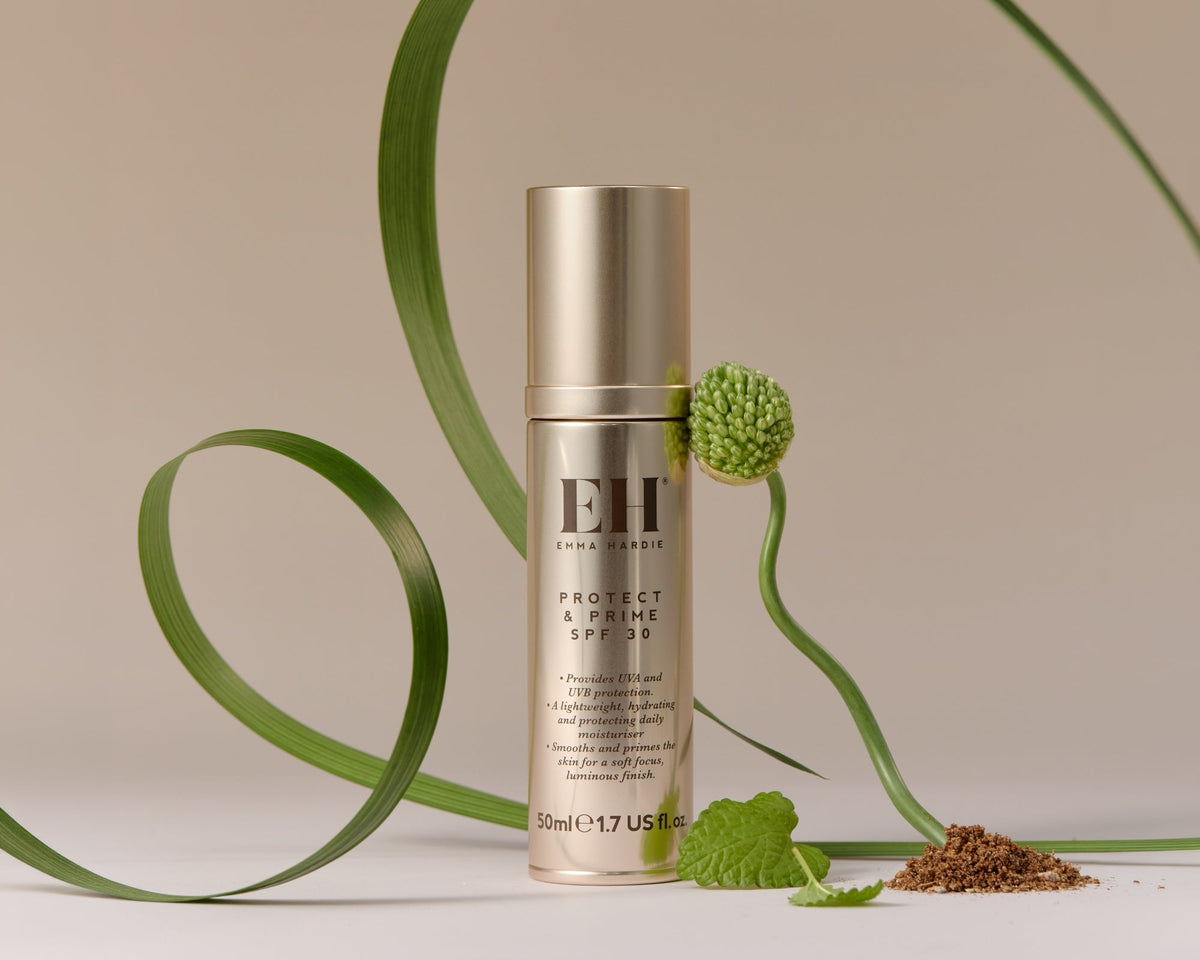
At Emma Hardie, our approach to ageing has always been about working with the skin rather than against it. SPF fits that philosophy completely. Our Protect and Prime SPF30 was developed with that thinking at its centre, pairing broad-spectrum protection with skin-supporting ingredients that make it a genuinely ritual-worthy morning step, rather than an afterthought.
Great skin is built through consistency. And daily SPF is one of the most powerful commitments you can make to it.
How to make SPF a simple part of your morning routine
Once SPF has a clear place in your morning ritual, it becomes an easy habit to maintain. Apply your SPF as the final step in your skincare routine, once your moisturiser has had a moment to settle. If you would like a little more guidance on layering, skincare application guides explain each step clearly. When it comes to protection, generosity matters. Use enough SPF to cover the face, neck and décolletage evenly, and follow the amount recommended on your product. Applying too little can reduce the level of protection you receive.
If you wear foundation or tinted moisturiser, choose a lightweight formula that sits comfortably underneath without pilling or feeling heavy. Many modern SPFs wear beautifully under makeup, so there is no need for the final step to feel cumbersome.
If you have ever wondered if you should wear SPF daily, this is part of the answer: it fits easily into real life and quietly supports your skin every single day.
Frequently Asked Questions
Is SPF really necessary every day?
Yes. UV exposure happens throughout the year, including on cloudy days. Making SPF part of your daily morning ritual helps protect skin consistently over time.
Is SPF 30 enough for daily use?
For everyday wear, a broad-spectrum SPF30 provides a strong level of protection when applied generously and evenly. Reapply when spending longer periods outdoors or in direct sun.
How does daily SPF use help my skin?
Daily SPF helps protect against UV exposure that can contribute to uneven tone, dark spots, fine lines and loss of firmness over time. Consistent protection helps support smoother, more even-looking skin.
Do I need SPF on cloudy days?
Yes. UVA rays can still reach the skin through cloud cover, even when the sun does not feel strong. Keeping SPF in your morning ritual means your skin stays protected whatever the weather.