Vitamin C in Skincare: A facialist-led guide to radiance, layering and daily use
Knowing how to use Vitamin C in your skincare ritual can help you get the best from this brightening ingredient, without making your routine feel complicated. . In this guide, you will find out when to apply it, how to layer it gently with SPF and moisturiser, and how to build a calm, consistent ritual that your skin can actually settle into. Think of it as everything a trusted facialist would tell you, gathered in one place.
Vitamin C in skincare: what it actually does and why people reach for it
If you’ve been asking why vitamin Cis recommended so often in skincare, the answer is simple: it’s one of the best-known ingredients for helping skin look fresher, brighter and more even.
Vitamin C is an antioxidant, which means it helps defend the skin against free radicals created by daily exposure to things like UV, pollution and general environmental stress. Over time, those everyday pressures can leave the complexion looking dull, a little uneven and less radiant than it once did.
Research published in a peer-reviewed journal notes that normal skin contains high concentrations of vitamin C, which supports collagen synthesis and antioxidant protection against UV-induced photodamage. In other words, vitamin C already has an important relationship with healthy-looking skin, which is one reason it remains such a popular skincare ingredient.
In a well-formulated vitamin C serum for skin, it’s often used to help bring more visible brightness to a tired-looking complexion and support a clearer, more luminous overall look. That’s why so many people reach for it when their skin feels lacklustre or when they want their routine to have a little more glow-giving intent.
This fits beautifully with Emma Hardie’s philosophy: caring for skin in a way that feels thoughtful, balanced and consistent, rather than chasing quick fixes. If you’d like to explore the textures and formulas designed around that approach, our Brilliance Range is a helpful place to begin.
Should you use vitamin C in the morning or at night?
For most people, Vitamin C fits most naturally into the morning skincare routine. That is because its antioxidant role makes it especially useful before the day begins. Vitamin C helps support the skin against free radicals linked to UV exposure, pollution and daily environmental stress, which is why it pairs so well with morning SPF. Applied in the morning, a vitamin C serum can work quietly in the background to support your skin's natural defences before the day begins.
There are a few reasons Vitamin C sits so well in a morning ritual:
- Vitamin C neutralises free radicals from UV rays and city pollution throughout the day, when exposure is at its peak
- It works well alongside SPF, reinforcing your sunscreen's protective effect rather than replacing it
- Morning application supports a consistent vitamin C skincare routine that is easy to maintain
- It helps preserve brightness and even tone against the daily stressors that can dull your complexion over time
- It fits neatly before SPF, whether you use a Vitamin C serum, moisturiser or both.
Facialist note: Vitamin C in the morning, followed by SPF, is your skin's strongest daily defence against UV and pollution damage.
Night-time use is absolutely an option — particularly if you have sensitive skin or find that layering too many actives in your morning routine causes irritation. But for most people exploring how to use vitamin C on their face in a way that genuinely delivers, morning is the clearest, most practical answer. Consider that question settled.
How to use vitamin C without irritating your skin
If you’re wondering how to use vitamin C for skin without triggering redness or sensitivity, think like a facialist: keep the routine simple, steady and supportive of the barrier. In Emma Hardie’s approach, results come from consistency and care, not from pushing skin too hard.
Apply your leave-on Vitamin C step after cleansing. If you are using a Vitamin C serum, apply it before moisturiser. If you are using a Vitamin C moisturiser, use it as your moisturising step. You can also layer both, with serum first and moisturiser after. In the morning, always finish with SPF to help protect skin and support the brightening work in your routine. If you want a clearer picture of layering, our guide on what order to apply skincare is a useful next read.
If vitamin C is new to you, begin every other day rather than using it twice daily from the start. That gentle introduction often suits sensitive or reactive skin far better. It also helps to start with a softer-strength formula. Stronger is not always better, especially when your aim is comfortable, lasting use rather than a quick burst followed by irritation.
One small detail that can make a difference: apply to dry skin, particularly if your complexion is prone to stinging. Damp skin can sometimes make active formulas feel more intense than you need.
The most common mistake is overlayering. Using vitamin C in the same routine as retinol or strong exfoliating acids can leave skin feeling overworked, so it is usually kinder to alternate them instead. Skipping SPF after morning use is another easy way to undermine your results.
A calm, facialist-led vitamin C skincare routine will always take you further than an aggressive one. Support the skin barrier, build gradually, and let your skin settle into the ritual.
What to pair vitamin C with for better results
When it comes to getting the most from vitamin C in your skincare, think of it as part of a calm, supportive morning ritual rather than a standalone step. In a facialist-led routine, the ingredients around it matter just as much, especially if your aim is brighter-looking skin that still feels comfortable and cared for.
SPF is the most important partner. Vitamin C helps defend against the everyday oxidative stress that can contribute to dullness and uneven tone, while sunscreen helps shield skin from UV exposure. Used together in the morning, they make far more sense than either step on its own.
Hydration matters too. If you are using a Vitamin C serum, follow with moisturiser to keep skin feeling comfortable and supported. If you are using a Vitamin C moisturiser, that can be your moisturising step. You can also layer both, with serum first and moisturiser after, before finishing with SPF.
You can also pair vitamin C with hydrating ingredients such as hyaluronic acid, as well as antioxidant companions like vitamin E or ferulic acid, which are often included in the same formula. The exact layering can depend on the texture of each product, so it is usually best to follow the product directions and keep the routine simple.
For most people, how to use vitamin C in a morning ritual can stay simple: cleanse, apply vitamin C serum if using one, follow with moisturiser, then finish with SPF. If your Vitamin C step is a moisturiser, let that be your moisturising step before SPF. If you are refining your morning routine, our moisturisers and SPF collection is a helpful place to start.
Where Vitamin C fits in your Emma Hardie ritual
Once your Vitamin C step has a clear place in your routine, the wider ritual can be shaped around what your skin needs.
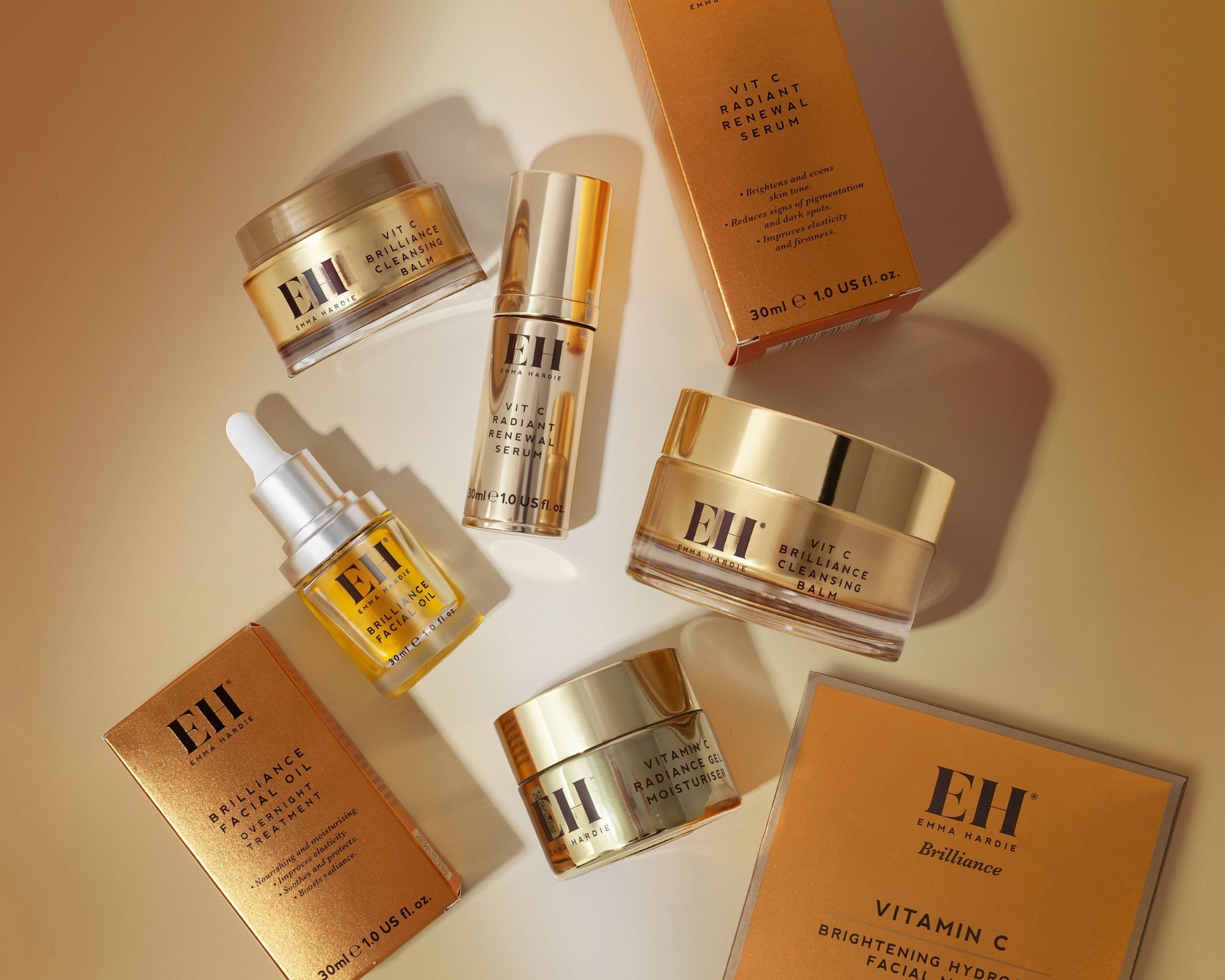
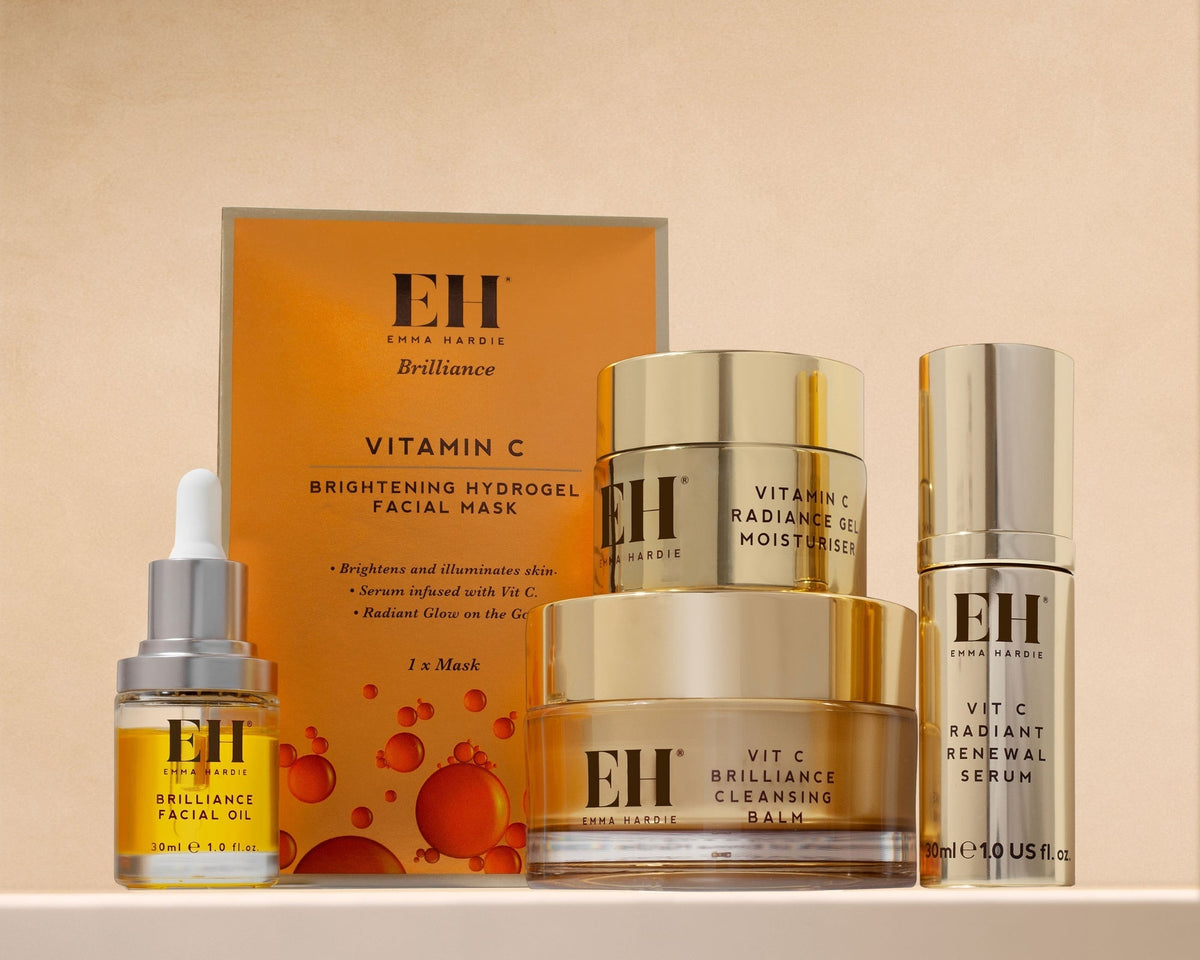
For skin that looks dull from the first cleanse, start with Vit C Brilliance Cleansing Balm to bring radiance into the opening step.
For more targeted brightness, use Vit C Radiant Renewal Serum as your treatment step.
For lightweight hydration and glow, choose Vitamin C Radiance Gel Moisturiser.
When skin needs more comfort, add Brilliance Facial Oil in the evening and use slow massage over the face, neck and décolleté.
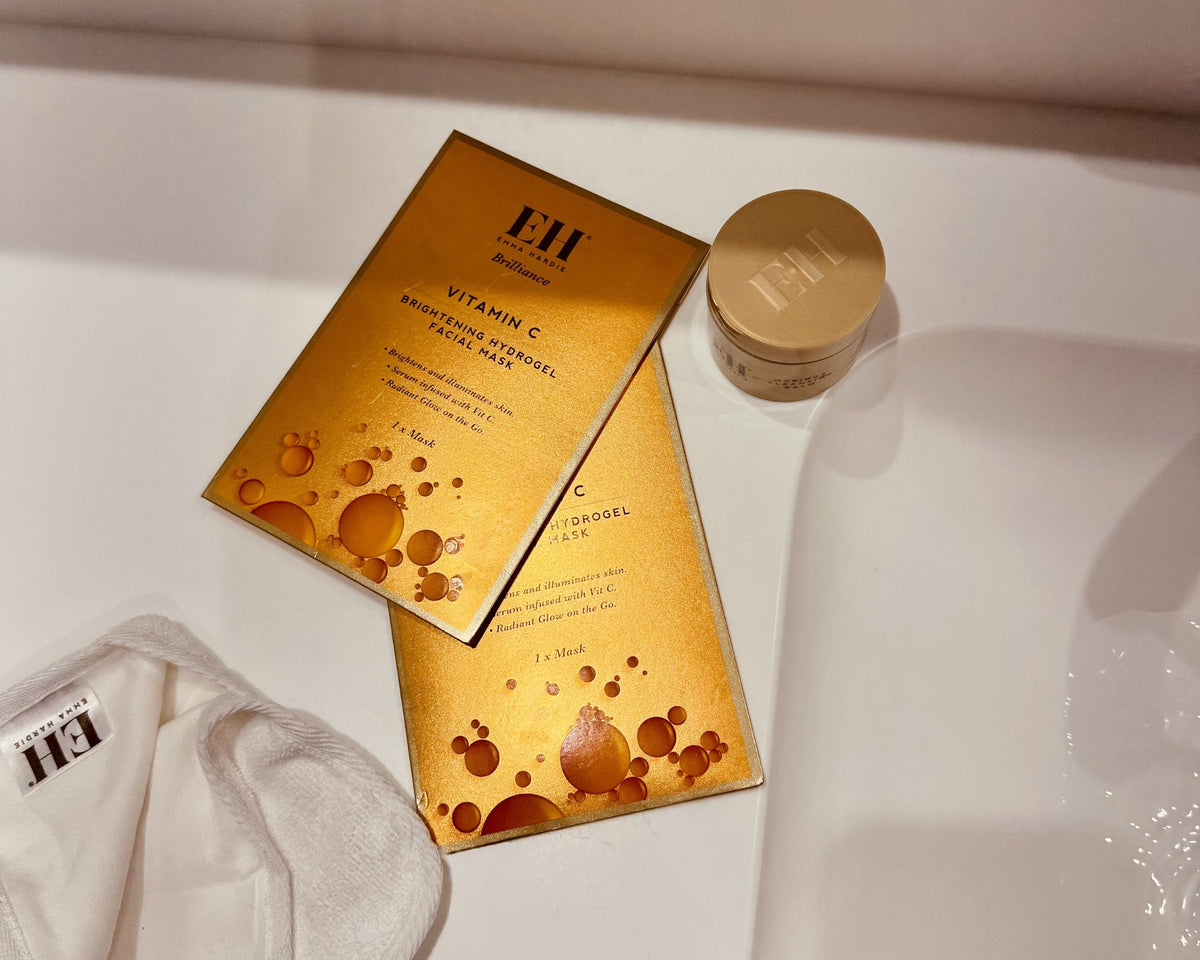
For a quick radiance reset, reach for Vitamin C Brightening Hydrogel Mask before an event, after travel or whenever skin looks tired.
The aim is not to use every product every day. It is to choose the Vitamin C texture that suits your skin, then build a ritual that feels clear, comfortable and easy to repeat.
Frequently Asked Questions
Why is Vitamin C important in skincare? Vitamin C helps skin look brighter, fresher and more even while supporting its natural defence against everyday environmental stress. As an antioxidant, it helps neutralise free radicals from UV and pollution, and it is also associated with collagen support, which is why it remains such a trusted skincare ingredient.
Can I use Vitamin C every day?
Yes, for most people vitamin C works well as a daily step, especially in the morning. A steady routine tends to give the best results, but if your skin is sensitive or reactive, it is usually wiser to introduce it every other day first and build up gently as tolerance allows.
What should I avoid using with Vitamin C?
It is usually best not to use vitamin C in the same routine as retinol or strong exfoliating acids, as that can leave skin feeling overworked and irritated. A calmer approach is to alternate them instead, then follow vitamin C with moisturiser and SPF in the morning.